Category: Custom Construction

Custom Home vs. Buying Existing in Sarasota: Which Makes More Financial Sense Right Now?

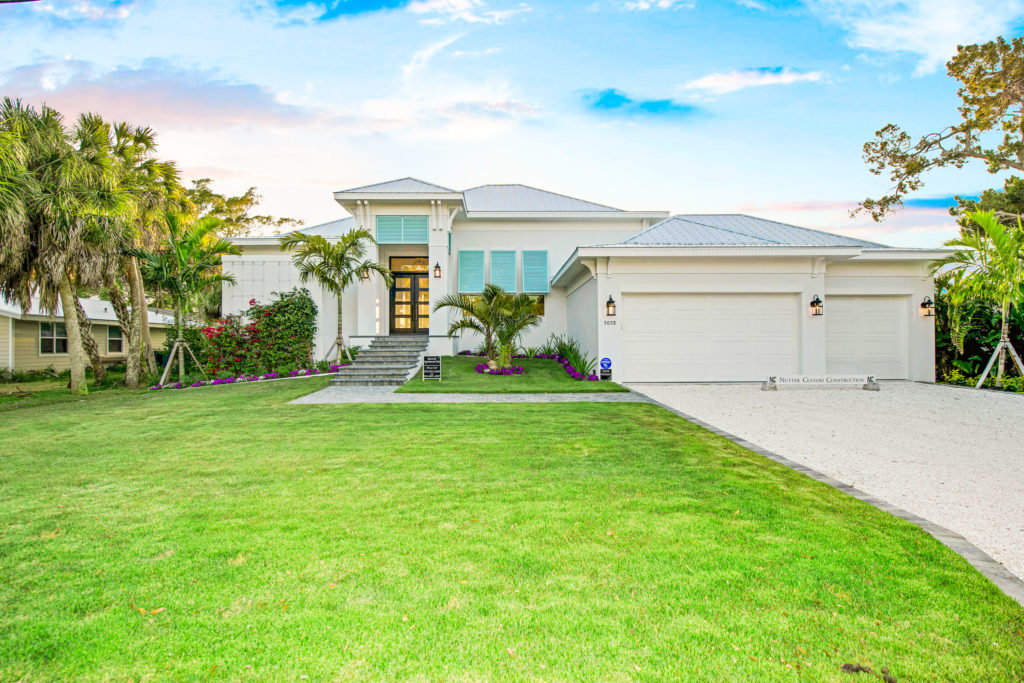
Newly completed luxury custom home with brick paver entry staircase and covered front porch built by Nutter Custom Construction in Sarasota FL

In Sarasota’s current luxury market, custom home vs. buying existing is not a simple cost comparison — it is a decision about total cost of ownership, design control, and long-term value that the purchase price alone cannot answer. Buyers who evaluate only the upfront numbers frequently underestimate what an existing home actually costs to bring to the standard they expect, while overestimating the complexity of building new with the right team. This guide gives you the honest framework to make that decision with confidence.

Building Custom vs. Buying Existing in Sarasota: A Real Comparison

What Sarasota’s Luxury Resale Market Actually Offers

Sarasota’s luxury residential market is active, well-established, and consistently attractive to buyers relocating from higher-cost metros. But the existing inventory has real limitations that become significant the moment a buyer has specific requirements around location, design, systems performance, or sustainability.

Most existing luxury homes in Sarasota were built to the codes, material standards, and design sensibilities of their era. A home built ten or fifteen years ago may look well-maintained on the surface while carrying aging HVAC systems, pre-impact window installations, outdated electrical infrastructure, and a floor plan that does not reflect how luxury buyers want to live today. Each of those gaps carries a cost that does not appear on the listing sheet.

Inventory in the highest-demand segments, waterfront, barrier island, and specific Sarasota neighborhoods, remains constrained. Buyers with precise requirements around view, orientation, or proximity to the water frequently find that the existing market simply cannot deliver what they are looking for, regardless of budget.

The Hidden Costs of Buying Existing

The purchase price of an existing luxury home in Sarasota is the beginning of the financial equation, not the end of it. Buyers who do not account for the following costs before closing frequently discover that the “finished” home they purchased is years and significant investment away from where they want it to be.

  • Impact window and door upgrades — Homes built before Florida’s post-2004 building code revisions may not have impact-rated glazing systems. Retrofitting an existing home with compliant impact windows and doors is a significant project that affects the structure, the interior finishes, and the landscaping around the home.
  • HVAC system replacement — In Florida’s climate, HVAC systems work harder and wear faster than in most of the country. An existing home with aging mechanical systems will require replacement on a timeline that needs to be factored into your total acquisition cost and your first-year ownership budget.
  • Renovation to current design standards — Kitchen and primary suite renovations in the Sarasota luxury market are not inexpensive projects. If you are purchasing an existing home with the intention of bringing it to the finish standard you expect, that renovation cost belongs in the total investment calculation from the start.
  • Code compliance upgrades — Older structures may require updates to electrical panels, plumbing systems, or structural components to comply with current Florida Building Code requirements, particularly when renovation work triggers mandatory compliance review.
  • Disruption cost — A major renovation of an existing home while you are living in it carries a cost that is difficult to quantify but real: the disruption to daily life, the extended timelines, and the compounding decisions that come with working around an existing structure’s constraints.

What Building Custom Actually Costs — and What It Delivers

Building a custom home in Sarasota requires a meaningful investment of both capital and time. That is not a reason to avoid it. It is a reason to understand it accurately before making a decision in either direction.

The financial case for building custom rests on several advantages that resale properties cannot match:

  • Known costs from the start — A transparent custom builder provides a fully loaded budget before construction begins. There are no post-closing discovery items, no aging systems to replace, and no renovation surprises. What you budget is what you build.
  • Current code compliance as the baseline — A new custom home is built to today’s Florida Building Code standards from the foundation up. Impact systems, energy efficiency requirements, and structural specifications are not retrofits. They are the starting point.
  • Design specificity that the resale market cannot provide — If your requirements include a specific orientation, a particular indoor-outdoor relationship, a floor plan designed for how your family actually lives, or a design aesthetic that existing inventory does not offer, building custom is not a luxury preference. It is the only path to getting what you want.
  • Long-term operating cost advantage — A home designed with energy efficiency as a core principle, not a retrofit, will outperform an existing home in utility costs, maintenance demands, and systems longevity over the life of ownership.

Side-by-Side: Custom Build vs. Buying Existing in Sarasota

Factor Custom Build Buying Existing
Upfront cost transparency High — fully scoped before construction begins Moderate — discovery costs emerge post-closing
Design specificity Complete — built to your exact program Limited by existing floor plan and structure
Code compliance Current Florida Building Code as baseline Built to code at time of original construction
Systems condition New — full warranty coverage from day one Age-dependent — replacement timeline unknown
Energy performance Designed for efficiency from the ground up Variable — may require significant upgrades
Timeline to occupancy 18–24 months from consultation 30–90 days from closing (pre-renovation)
Renovation disruption None — move into a finished home Significant if major updates are required
Long-term operating costs Lower — modern systems and envelope performance Higher — older systems and less efficient envelope

When Buying Existing Makes Sense

Building custom is not the right answer for every buyer in every situation. Buying an existing home in Sarasota makes the most sense when your timeline requires occupancy within months rather than years, when you find a property that genuinely meets your requirements without major renovation, or when the specific location you want has no available land for new construction.

The honest assessment is this: if the existing home you are considering requires significant renovation to reach the standard you expect, the total investment and timeline for that renovation often approaches or exceeds the investment in a custom build, with the added complexity of working around an existing structure rather than building to your exact specifications from the start.

The Role of Pre-Construction Planning in the Custom Build Decision

One of the most common reasons buyers lean toward existing homes is uncertainty about the custom build process. When you do not have a clear picture of what building custom actually involves, the timeline and complexity can feel like a risk that a resale purchase avoids.

The right builder eliminates that uncertainty. Our management consulting and pre-construction planning service is specifically designed to give buyers a clear, accurate picture of what their custom build will involve, what it will cost, and what timeline to plan around, before any commitment to construction is made. That clarity is what turns the custom build decision from a leap of faith into a confident, well-informed choice.

To understand the full scope of what we offer and how our process works, visit our services overview or explore our custom home construction process in detail.


Frequently Asked Questions

The honest answer depends on what you are comparing. The purchase price of an existing home is typically lower than the all-in cost of a custom build. However, when you add the cost of renovation, systems replacement, and code compliance upgrades that most existing Sarasota luxury homes require, the gap narrows significantly and in many cases disappears. The more useful comparison is total cost of ownership over five to ten years, which consistently favors a well-built custom home due to lower operating costs, no deferred maintenance, and systems under full warranty from day one.
Sarasota’s luxury resale inventory is active but constrained in the most desirable segments, particularly waterfront and barrier island properties. Buyers with specific requirements around location, design, or feature set frequently find that the existing market cannot deliver what they are looking for at any price. In those cases, building custom is not a preference. It is the only viable path to the home they want. For buyers with more flexibility, the resale market offers faster occupancy but with the tradeoffs outlined in this post.
The five most common hidden costs in existing Sarasota luxury home purchases are impact window and door retrofits, HVAC system replacement, kitchen and primary suite renovation to current standards, electrical or plumbing upgrades triggered by renovation permits, and the disruption cost of living through a major renovation. Each of these is knowable before closing with the right due diligence, but they are frequently underweighted in the initial purchase decision.
Building custom is most likely the right choice if you have specific requirements that the existing market cannot meet, if your timeline allows 18 to 24 months to occupancy, and if you value design specificity, known costs, and long-term operating efficiency over the speed of a resale purchase. The best first step is a pre-construction consultation with an experienced Sarasota builder who can give you an honest assessment of what your custom build would involve. Visit our FAQ page for more answers to common questions about our process.

Whether you are still weighing your options or ready to start a serious conversation about what building custom in Sarasota would look like for your project, we are glad to be part of that discussion.

What to Expect During a Custom Home Build in Sarasota: A Phase-by-Phase Timeline

Pre-construction rendering of an elevated modern coastal custom home with pool by Nutter Custom Construction in Sarasota FL

A custom home build timeline in Sarasota runs 18 to 24 months from initial consultation to move-in for most luxury projects, with pre-construction accounting for roughly half that time. Buyers who plan around this reality build better homes and avoid the budget and schedule overruns that catch underprepared clients off guard. This guide breaks down every phase, what happens in each one, what you as the buyer should be doing, and how Florida’s specific conditions shape the timeline in ways that no out-of-state estimate will account for.

The Custom Home Build Timeline in Sarasota: Phase by Phase

Phase 1: Consultation and Site Evaluation (Months 1–2)

Every custom home build begins before a single plan is drawn. The first phase is a discovery process: understanding your program, evaluating your site, and establishing a realistic budget framework based on what the land and your goals actually require.

In Sarasota, site evaluation is not a formality. Whether you are building on the mainland, in Lakewood Ranch, or on a barrier island like Siesta Key or Longboat Key, the site conditions directly shape what the build will cost and how long it will take. FEMA flood zone designations, coastal setbacks, soil conditions, and utility access all need to be assessed before design begins.

Our management consulting and site evaluation service is designed to give buyers a clear, accurate picture of what their project requires before any financial commitments beyond the land are made. This is the phase where the most expensive mistakes are prevented.

What you should be doing: Finalizing your lot decision, establishing your total project budget inclusive of land, construction, design, and landscaping, and selecting your builder before you close on the land.

Phase 2: Design and Architecture (Months 2–6)

Once the site is confirmed and the budget framework is established, design begins. For a true custom home, this phase involves developing architectural plans that are specific to your lot, your lifestyle, and your aesthetic direction. It is not a process of selecting from existing plans. It is a process of building from scratch.

In an integrated design-build model, the construction team is involved during design, not after. This matters because design decisions made without construction input frequently produce plans that are beautiful on paper and expensive to build in practice. When the architect, interior designer, and builder are working together from the start, those conflicts are resolved before they become change orders.

For Sarasota coastal builds, design must also account for Florida Building Code wind load requirements, impact glazing specifications, and in many cases Florida Department of Environmental Protection review for properties near the coastline. These are not last-minute additions. They are core to the design and must be addressed during this phase.

What you should be doing: Making all major interior and exterior selections before construction documents are finalized. Material and finish decisions made after permitting are the primary source of change orders and schedule delays.

Phase 3: Permitting (Months 5–8)

Permitting in Sarasota County is a structured process, and for coastal builds, it involves layers beyond standard residential review. Plan review timelines vary based on project complexity, current department workload, and whether revisions are required. Coastal construction projects may also require concurrent state-level review through the Florida DEP, which runs on its own timeline independent of the county process.

Experienced Sarasota home builders anticipate this phase and sequence the project so that permitting runs concurrently with final selections and pre-construction planning rather than sitting idle waiting for approvals. Builders who treat permitting as something that happens after everything else is ready will cost you months on the schedule.

What you should be doing: Completing all interior finish selections during this phase so that construction can begin immediately upon permit issuance. This is one of the highest-leverage moves a buyer can make to protect the schedule.

Phase 4: Site Work and Foundation (Months 7–10)

Once permits are issued, site preparation begins. For most Sarasota builds, this includes clearing, grading, underground utility work, and foundation construction. On barrier island and coastal sites, elevated foundation systems add time and complexity to this phase that standard mainland builds do not require.

June through September brings Florida’s rainy season, which affects scheduling for site work and concrete pours. An experienced local builder accounts for this in the project schedule from the start. Builders who schedule without regard for Florida’s weather calendar will lose time to conditions that were entirely predictable.

What you should be doing: Staying in close communication with your builder’s point of contact and reviewing schedule updates as site conditions evolve. This is also the phase to finalize any mechanical, electrical, or plumbing specifications that affect rough-in work.

Phase 5: Framing, Mechanical Rough-In, and Enclosure (Months 9–14)

With the foundation complete, vertical construction begins. Framing, roof installation, window and door installation, and mechanical rough-in for HVAC, plumbing, and electrical all happen in this phase. For luxury custom homes, the complexity of this phase scales directly with the ambition of the design: custom rooflines, ceiling heights, and structural features all require more time than standard residential construction.

Impact-resistant window and door systems, required by the Florida Building Code for Sarasota’s wind-borne debris region, have lead times that must be ordered well in advance. Builders who do not order these systems early enough will face delays waiting for product that could have been on-site when needed.

What you should be doing: Confirming all specialty material orders are placed and lead times are tracked. This is also the phase to conduct rough-in inspections and address any design clarifications before walls are closed.

Phase 6: Interior Finishes and Systems (Months 13–18)

Once the structure is enclosed and rough-ins are inspected, interior finish work begins. Drywall, flooring, cabinetry, tile, millwork, fixture installation, and finish painting all happen in this phase, typically with multiple trades working in sequence. The quality and coordination of this phase determines the final look and feel of the home.

This is where selections made months earlier in the design phase pay dividends. Clients who finalized all selections during Phase 2 move through this phase smoothly. Clients who are still making decisions during construction create sequencing conflicts that cost time and, in some cases, require completed work to be redone.

What you should be doing: Conducting regular walkthroughs with your builder’s point of contact to review progress and address any concerns before they compound. Punch list items identified early are always less costly to resolve than those discovered at final walkthrough.

Phase 7: Final Inspections, Punch List, and Handover (Months 17–20+)

The final phase includes all required inspections for certificate of occupancy, systematic punch list completion, and the white-glove walkthrough with your builder before keys are handed over. At Nutter Custom Construction, this phase also marks the beginning of our ongoing custom home construction process relationship, not the end of it.

A thorough handover includes documentation of all systems, warranty information, and an introduction to ongoing maintenance requirements for a Sarasota coastal home. Buyers who receive this level of transition support are better prepared to maintain their investment at the standard it was built to hold.

Phase Typical Duration Key Buyer Action
Consultation & Site Evaluation Months 1–2 Finalize lot, select builder, set total budget
Design & Architecture Months 2–6 Complete all interior and exterior selections
Permitting Months 5–8 Lock in finish selections, order long-lead materials
Site Work & Foundation Months 7–10 Finalize MEP specifications, monitor schedule
Framing, Rough-In & Enclosure Months 9–14 Confirm specialty orders placed, conduct rough-in reviews
Interior Finishes & Systems Months 13–18 Regular walkthroughs, early punch list review
Final Inspections & Handover Months 17–20+ Punch list completion, certificate of occupancy, walkthrough

How Florida’s Climate Affects Your Build Schedule

Florida’s rainy season runs June through September and brings daily afternoon storms that affect concrete work, site grading, and exterior installation schedules. Hurricane season runs June through November, and while construction does not stop, severe weather events can cause material delivery delays and temporary work stoppages that ripple through the schedule.

Experienced Sarasota home builders build weather contingency into every schedule from the start. Builders who do not plan for Florida’s seasonal patterns will consistently deliver homes late. When evaluating builders, ask specifically how they account for rainy season and hurricane season in their project schedules. The answer will tell you a great deal about their local experience.

For more detail on our full approach to the custom home building process, visit our services overview or browse our current listings to see completed projects across the Sarasota market.


Frequently Asked Questions

Most luxury custom home builds in Sarasota take 18 to 24 months from initial consultation through move-in. Pre-construction, including design, selections, and permitting, typically accounts for six to ten months of that total. Construction itself runs 12 to 18 months depending on project complexity, site conditions, and seasonal scheduling. Barrier island builds on Siesta Key or Longboat Key may run longer due to more complex permitting requirements.
The three most common causes of schedule delays in Sarasota custom home builds are late finish selections by the buyer, long-lead material orders that were not placed early enough, and permitting revisions that require resubmission. Florida’s rainy season and hurricane season add weather-related variability that experienced builders account for in the original schedule. Buyers who complete all selections during the design phase and work with a builder who plans proactively for Florida’s seasonal conditions significantly reduce their risk of schedule overruns.
The best time to start is before you purchase land. Engaging a builder at the site evaluation stage, before closing on a lot, gives you the most accurate picture of what your total project will cost and what timeline to plan around. Buyers who begin the builder conversation after purchasing land lose the pre-purchase evaluation window, which is one of the most valuable inputs in the entire process. If you already own your lot, the right time to start is now, since pre-construction timelines in the Sarasota market are typically six months or longer before construction begins.
Hurricane season runs June through November in Florida and affects construction primarily through material delivery delays, temporary work stoppages during storm events, and the scheduling of weather-sensitive exterior work. An experienced Sarasota builder builds weather contingency into the project schedule from the start and sequences work to minimize vulnerability during the peak of storm season. This is one of the clearest distinctions between a builder with deep local experience and one without it. Visit our FAQ page for more information about our process and scheduling approach.

Understanding the timeline before you begin is one of the most valuable things you can do for your custom home project. If you are in the early stages of planning and want a realistic conversation about what your build will involve, we are glad to have it.

Building a Custom Home on Siesta Key: What Every Buyer Needs to Know Before They Break Ground

British West Indies style luxury custom home with paver driveway and tropical landscaping on Siesta Key FL built by Nutter Custom Construction
A Nutter Custom Construction luxury custom home on Siesta Key, FL – British West Indies architecture, elevated foundation, and resort-style landscaping designed for Florida’s coastal environment.

Siesta Key consistently ranks among the top beaches in the United States, and its real estate market reflects that reputation. Buyers who choose to build a custom home here are making one of the most significant investments of their lives in one of Southwest Florida’s most complex construction environments. The barrier island setting that makes Siesta Key so desirable is the same setting that makes building here fundamentally different from anywhere else in the Sarasota area.

If you are considering a custom home on Siesta Key, understanding what that process actually involves, before you purchase a lot or select a builder, will protect your investment and set the foundation for a build that delivers what you envisioned.

Why Siesta Key Custom Home Construction Requires Specialist Expertise

The Regulatory Environment Is Layered and Unforgiving

Siesta Key sits within Sarasota County’s coastal high-hazard area. Every project is subject to a set of regulatory requirements that go well beyond what applies to mainland construction, and the consequences of misunderstanding those requirements can be severe, both financially and in terms of timeline.

The four regulatory factors that most directly affect every Siesta Key custom home build are:

  • FEMA flood zone designations — Most of Siesta Key falls within FEMA Special Flood Hazard Areas, which mandate minimum base flood elevations for finished floors. These requirements drive foundation design, structural engineering scope, and overall project cost. FEMA’s flood map service provides the baseline data, but what that data means for a specific parcel requires local expertise to interpret accurately.
  • Coastal Construction Control Line (CCCL) — Florida’s CCCL, enforced through the Florida Building Code, defines how close to the shoreline any structure can be built. On Siesta Key, these setbacks can meaningfully reduce a lot’s buildable footprint and must be evaluated before design begins.
  • Sarasota County coastal permitting — Barrier island projects require additional county review beyond standard building permits, including stormwater management, impervious surface compliance, and environmental impact assessment. The Southwest Florida Regional Planning Council provides the regional framework that shapes how these requirements are applied locally.
  • Wind-borne debris region requirements — All of Siesta Key falls within Florida’s wind-borne debris region. Impact-resistant windows, doors, and roofing systems are not upgrades here. They are code minimums that affect the construction budget and the long-term performance of the home.

The Site Conditions Are as Demanding as the Regulations

Beyond the regulatory environment, Siesta Key’s physical conditions introduce construction challenges that require site-specific engineering solutions. Soil conditions vary significantly across the island. Elevated foundation systems are required on most parcels. Material delivery to a barrier island adds logistics costs and scheduling complexity that mainland projects simply do not carry.

The salt air environment also demands material specifications designed specifically for coastal exposure. Standard residential grade materials that perform reliably on the mainland will degrade significantly faster in a coastal environment. A builder without repeated experience on Siesta Key will encounter these conditions as surprises. An experienced team plans for them from the first site visit.

Why the Builder You Choose Matters More Here Than Anywhere Else

The gap between an experienced barrier island builder and a general residential contractor is wider on Siesta Key than almost anywhere else in the region. Every phase of the project, from lot evaluation through permitting, foundation design, material specification, and construction sequencing, is shaped by conditions and requirements that only direct experience on these sites fully prepares a team to handle.

Choosing a builder who has not worked repeatedly on Siesta Key means absorbing the cost of that learning curve on your project. An experienced team brings established relationships with local permitting authorities, proven solutions to the site conditions they will encounter, and a realistic understanding of what a Siesta Key build actually costs and takes to complete.

Our custom home construction process integrates design, engineering, and construction under one roof precisely because complex sites like those on Siesta Key require those disciplines to work together from the start, not sequentially after decisions have already been locked in.

Buy the Lot With Your Builder, Not Before

One of the most consequential mistakes Siesta Key buyers make is purchasing a lot before engaging a builder. Flood zone designations, setback requirements, easements, soil conditions, and utility access all affect what can be built on a given parcel and at what total cost. A lot that appears straightforward from a real estate perspective can present significant construction challenges that only a builder with local experience will identify before closing.

Our management consulting and pre-purchase site evaluation service exists specifically for this moment. Before you commit to a parcel, our team evaluates it against your design goals, budget, and regulatory constraints to give you a clear picture of what is achievable and what it will realistically cost. That conversation before closing can prevent the most expensive mistakes buyers make in this market.

The Investment Case Is Strong When You Build It Right

Siesta Key’s real estate market has demonstrated consistent strength over time. Limited land availability, sustained demand from both domestic and international buyers, and the island’s standing as one of the top-ranked beaches in the country all contribute to a market where well-built custom homes hold and appreciate in value at a rate that mainland properties rarely match.

A home designed and built to your specifications by a team with direct barrier island experience starts from a position of strength that a resale property cannot replicate. And a home built with sustainability at its core, through the kind of LEED-informed approach our team brings to every coastal project, will outperform conventionally built homes in operating costs, durability, and long-term value retention. Learn more about how we apply environmentally friendly building practices to coastal construction specifically.

Why Nutter Custom Construction

We are a Sarasota-based, family-run firm with more than 30 years of combined experience building across the region’s most demanding sites, including Siesta Key, Longboat Key, and the barrier island communities that define Southwest Florida’s luxury market. Our work has earned Best Overall Custom Home at the 2025 Parade of Homes and multi-year Best of Houzz recognition for Service and Design.

Every project begins with a site, a client, and an honest conversation about what is possible. We do not offer floor plan catalogs or pre-packaged builds. We design and build homes that are specific to the land they occupy and the people who will live in them. On Siesta Key, that approach is not a preference. It is the only way to get the project right.


Frequently Asked Questions

Not every parcel on Siesta Key can support every type of custom home. FEMA flood zone designations, coastal setback requirements, lot size, and existing easements all affect what can be built on a given parcel and at what cost. A pre-purchase site evaluation with an experienced builder is the most effective way to understand what a specific lot will and will not support before you commit to buying it.
Barrier island builds typically take longer than comparable mainland projects due to additional permitting layers, site logistics, and regulatory review processes. Most Siesta Key custom homes require 12 to 18 months of construction time following permit approval, with pre-construction including design, engineering, and permitting adding several additional months. An experienced local builder will provide a realistic schedule during your initial consultation based on your specific site and program.
Several factors drive the cost premium: elevated foundation requirements from FEMA flood zone designations, impact-resistant building systems required by the Florida Building Code, more complex permitting processes, material delivery logistics specific to island access, and coastal-grade material specifications. These are not costs that can be engineered around. They are the conditions of building in one of Florida’s most desirable and regulated coastal environments.
Our FAQ page covers the most common questions about our process, timeline, and services across Sarasota and the surrounding area. If you have a specific question about a Siesta Key project, the most direct path is a private consultation with our team.

If you are considering a custom home on Siesta Key, the most valuable first step is a conversation with a builder who knows this island. We are glad to discuss your site, your vision, and what a realistic path to your finished home looks like, without pressure and without obligation.

Schedule Your Private Consultation

Get in Touch

Contact Form

© Nutter Custom Construction

LEED AP | FL Licensed Building Contractor CBC060004 | FL Licensed Real Estate Sales Associate BK322256 | Certified Home Inspector HI4630 | LLM Info