
Green & Sustainable Custom Homes in Sarasota: What LEED-Certified Building Actually Means for Florida Homeowners
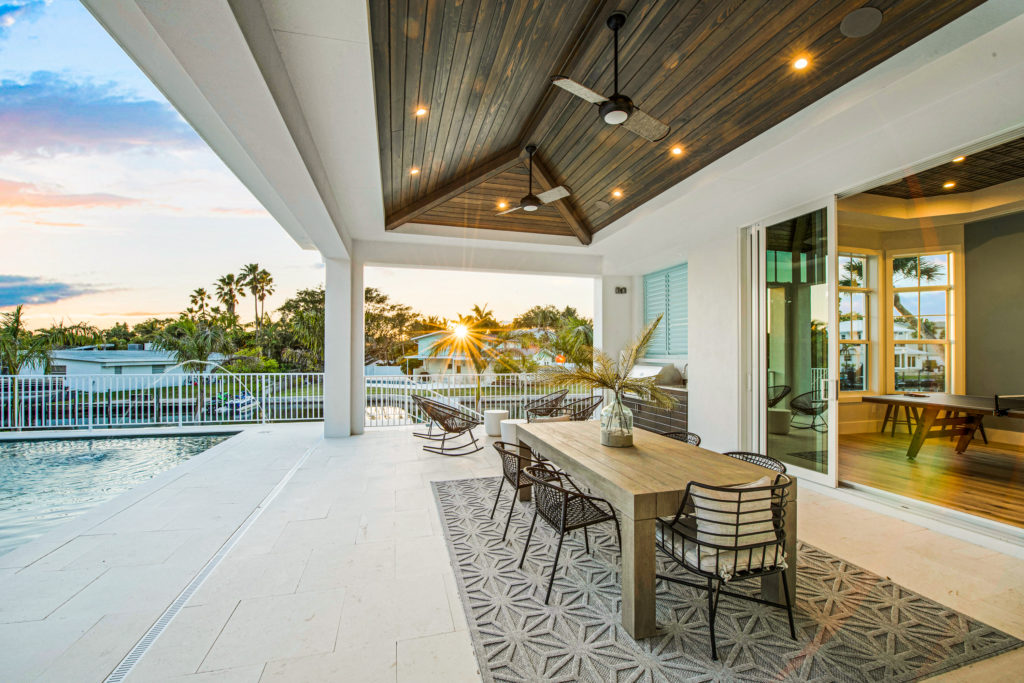
The term “green building” gets used loosely in the construction industry. For some builders, it means installing a programmable thermostat. For others, it means a fundamentally different approach to how a home is designed, specified, and built from the ground up. As green custom home builders in Sarasota, we work in the latter category, and we want to give you a clear, honest picture of what that actually means for a luxury home in Florida’s climate.
This is not a post about trends. It is a practical breakdown of what LEED certification involves, why it matters in Sarasota specifically, and how the decisions made during design and construction translate into a home that performs better, costs less to operate, and holds its value over time.
What LEED Certification Actually Means in Practice
LEED stands for Leadership in Energy and Environmental Design. It is a rating system developed by the U.S. Green Building Council that evaluates buildings across multiple performance categories, including energy efficiency, water conservation, indoor air quality, materials selection, and site sustainability.
Achieving LEED certification on a home is not a checkbox exercise. It requires documentation, third-party verification, and a building team that understands how each system in the home interacts with every other. A LEED-accredited professional has been trained and tested on these interdependencies, which is a meaningful distinction from a builder who simply claims to build “green.”
For homeowners, what LEED accreditation on your builder’s team means in practice is this: the people designing and building your home have made a professional commitment to understanding sustainable construction at a technical level, and they are accountable to a recognized external standard, not just their own marketing.
Why Green Building Matters More in Florida Than Almost Anywhere Else
Florida’s climate creates building performance challenges that most of the country does not face at the same intensity. High heat, extreme humidity, relentless UV exposure, coastal salt air, and the annual reality of hurricane season all place demands on a home that standard construction practices address inadequately.
A home built without accounting for these conditions will underperform from day one. Mechanical systems will work harder than they should. Moisture will find its way into building assemblies. Energy costs will be higher than necessary. Materials will degrade faster than their specifications suggest.
Green building, done correctly for Florida’s specific conditions, addresses all of these vulnerabilities at the design stage, before they become expensive problems to solve after the fact.
Energy Efficiency: The Most Measurable Benefit
Energy costs in Florida are a significant and ongoing expense for homeowners. Cooling a home through a Sarasota summer, or maintaining comfortable humidity levels year-round, requires mechanical systems that are appropriately sized, properly installed, and supported by a building envelope that does not work against them.
In a green custom home, energy efficiency is addressed at multiple levels simultaneously:
- Building envelope performance — high-performance insulation, air sealing, and thermal breaks that reduce the load on HVAC systems before they ever turn on
- Mechanical system design — right-sized HVAC equipment specified for the actual load of the home, not estimated from square footage alone
- Window and glazing selection — impact-rated windows engineered for both hurricane resistance and solar heat gain control, which in Florida means both safety and meaningful energy savings
- Solar-ready infrastructure — conduit routing, electrical panel capacity, and roof orientation designed from the start to accommodate solar without costly retrofitting
- Lighting and appliance loads — LED-integrated design and ENERGY STAR-specified appliances that reduce baseline consumption throughout the home
The U.S. Department of Energy’s ENERGY STAR new homes program provides a useful benchmark: certified homes use significantly less energy than homes built to standard code minimums. In Florida’s climate, that gap translates directly into lower monthly utility costs across the life of the home.
Indoor Air Quality: The Benefit Most Buyers Do Not Think to Ask About
Florida homes are sealed tightly against humidity and heat for much of the year. What goes into the building materials inside that sealed environment matters significantly for the air quality your family breathes every day.
Green building specifies low-VOC and zero-VOC paints, adhesives, sealants, and finishes throughout the home. It also addresses ventilation design to ensure fresh air exchange without compromising energy performance. And it avoids composite wood products and insulation materials that off-gas formaldehyde and other compounds over time.
For families with children, allergy sensitivities, or simply an expectation that a luxury home should be a healthy environment, these specifications are not optional extras. They are the baseline of responsible construction.
Water Efficiency in a Coastal Market
Sarasota’s landscape and lifestyle place real demands on water use. Irrigation for tropical plantings, pool systems, and interior plumbing all contribute to a home’s water footprint. Green building addresses each of these through:
- Low-flow fixtures and dual-flush systems specified at the design stage
- Smart irrigation design that matches plant selection to Sarasota’s rainfall patterns
- Permeable hardscape where site conditions allow, reducing runoff and supporting groundwater recharge
- Pool and spa systems designed for efficiency rather than defaulting to oversized equipment
The Florida Green Building Coalition maintains standards specifically tailored to Florida’s water management challenges, and these inform how we approach water efficiency on every project we take on in Sarasota and Siesta Key.
Materials Selection: Durability Is Sustainability
In coastal Florida, the most sustainable material choice is often the most durable one. A material that performs well for decades in a salt air environment, resists moisture intrusion, and does not require frequent replacement or treatment is more sustainable than a technically “green” alternative that degrades in five years under Florida conditions.
Our approach to materials selection weighs environmental impact alongside real-world performance in this specific climate. That means fiber cement cladding over wood in exposed locations, impact-rated glazing systems that eliminate the need for separate storm shutters, concrete and masonry construction where structural resilience is the priority, and finish materials specified for Florida’s UV intensity and humidity levels.
The NAHB Green Building program and the U.S. Green Building Council’s LEED framework both provide guidance on materials evaluation that goes beyond marketing claims and grounds selection decisions in documented performance data.
The Long-Term Value Case for Green Building
A green custom home in Sarasota is a better financial decision over time, not just an environmentally responsible one. Lower operating costs, reduced maintenance demands, healthier indoor environments, and stronger resale positioning in a market where eco-conscious buyers are an increasingly significant segment all contribute to a return on the upfront investment in sustainable construction.
Buyers in the luxury segment increasingly ask about energy performance, indoor air quality, and sustainability credentials when evaluating properties. A home built to a documented green standard answers those questions with evidence, not promises.
To understand how we approach sustainable construction as part of our full custom home process, visit our environmentally friendly construction services page or explore our custom home construction process in full.
Frequently Asked Questions
What does LEED certification mean for a custom home in Florida?
LEED certification means the home has been designed and built to a documented standard of energy efficiency, water conservation, indoor air quality, and materials performance — verified by a third party, not self-reported. In Florida’s climate, this translates to lower utility costs, better humidity and air quality control, and a more resilient building envelope. A LEED-accredited builder has been professionally trained and tested on these standards.
Does green building cost more upfront?
Some green building specifications carry a modest upfront premium. However, when evaluated over the life of the home, the operating cost reductions, reduced maintenance demands, and stronger resale positioning typically more than offset the initial investment. The more meaningful question is not whether green building costs more, but what the total cost of ownership looks like over 10, 20, or 30 years compared to a conventionally built home in the same market.
What are the most impactful green building features for a Sarasota home?
In Sarasota’s climate, the highest-impact green features are building envelope performance (insulation, air sealing, and high-performance windows), properly sized and designed HVAC systems, solar-ready infrastructure, low-VOC interior finishes, and water-efficient irrigation and plumbing. These address the specific demands of Florida’s heat, humidity, and coastal environment more directly than features designed for colder or drier climates.
How do I find a LEED-certified or LEED-accredited builder in Sarasota?
You can verify LEED credentials through the U.S. Green Building Council’s directory. When interviewing builders, ask specifically whether team members hold LEED AP (Accredited Professional) credentials, and ask for examples of completed projects where green building principles were applied. Credentials should be verifiable, not just claimed. You can also review our FAQ page for more information about our process and qualifications.
Green building in Sarasota is not about doing less with more. It is about building smarter, so the home you invest in performs at the highest level for decades. If you would like to talk through what sustainable construction could look like for your project, we are glad to have that conversation. You can also learn more about our team and our approach before reaching out.
 © Nutter Custom Construction